
AVAILABLE IN ARABIC
About This Book
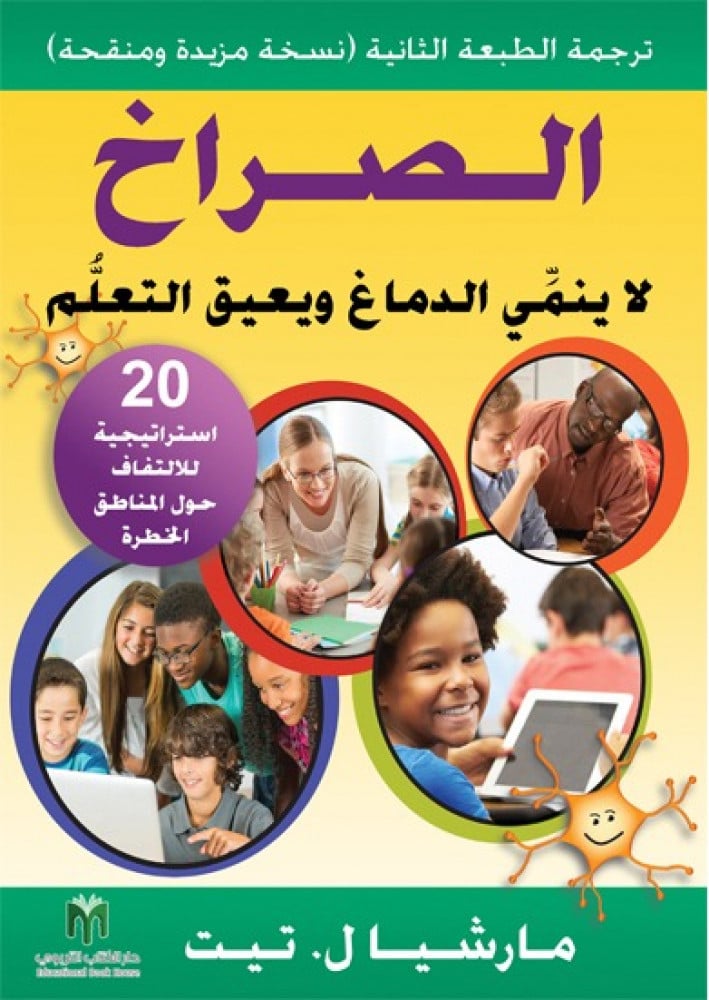
Behavioral problems often occur when students are bored or unmotivated. Your best offense is a classroom environment that’s proactive, supportive, and fun. This newly revised edition from education expert, Marcia L. Tate, helps you meet your students where they are. You’ll find 5 new ways to detour students around misbehavior, updated research, new vignettes, and the latest classroom management techniques that you can implement right away.
In a new two color illustrated format, Tate provides a theoretical framework, practical applications, detailed implementation, and reflection opportunity for each strategy introduced. Teachers at all levels will discover Common Core-aligned techniques that will help them to:
* Establish a relationship with students that supports deep learning
* Deliver brain-compatible lessons
* Work with students who have attention deficit disorder and chronic behavior problems
* Promote student concentration and memory with classroom arrangement, light, color, and music
Learn how to improve student learning in today’s challenging social climate. Implement the crucial elements for lasting motivation and engagement with this essential guide!
Topics : Student behavior
Table Of Content
Acknowledgments
About the Author
Introduction
DETOUR
Detour: Get to Know Each Student
1 Develop a Relationship With Each Student
What: Creating a Caring Culture
Why: Theoretical Framework
How: Classroom Application
Reflection
2 Expect the Best!
What: You Get What You Expect
Why: Theoretical Framework
How: Classroom Application
Reflection
3 Understand the Symptoms
What: Causes of Misbehavior
Why: Theoretical Framework
How: Classroom Application
Reflection
DETOUR
Detour: Create a Physical Environment Conducive to Learning
4 Light Up Their World
What: Lighting and the Brain
Why: Theoretical Framework
How: Classroom Application
Reflection
5 Let the Music Play
What: Music and the Brain
Why: Theoretical Framework
How: Classroom Application
Reflection
6 Color Their World
What: Color and the Brain
Why: Theoretical Framework
How: Classroom Application
Reflection
7 Stop and Smell the Roses
What: Aromas and the Brain
Why: Theoretical Framework
How: Classroom Application
Reflection
8 Create a Natural Environment
What: Room Arrangement and the Brain
Why: Theoretical Framework
How: Classroom Application
Reflection
DETOUR
Detour: Engage the Brains of Your Students
9 Use Brain-Compatible Strategies
What: Engaging the Brain
Why: Theoretical Framework
How: Classroom Application
Reflection
10 Hook Them Into Relevant Lessons
What: Attention and the Brain
Why: Theoretical Framework
How: Classroom Application
Reflection
11 Let Them Talk!
What: Conversation and the Brain
Why: Theoretical Framework
How: Classroom Application
Reflection
12 Let Them Move!
What: Movement and the Brain
Why: Theoretical Framework
How: Classroom Application
Reflection
13 Keep Them Laughing
What: Humor and the Brain
Why: Theoretical Framework
How: Classroom Application
Reflection
DETOUR
Detour: Develop a Proactive Management Plan
14 Teach Your Rituals
What: Establishing Your Procedures
Why: Theoretical Framework
How: Classroom Application
Reflection
15 Accentuate the Positive
What: Creating an Affirming Classroom Environment
Why: Theoretical Framework
How: Classroom Application
Reflection
16 Celebrate Good Times, Come On!
What: Celebrations and the Brain
Why: Theoretical Framework
How: Classroom Application
Reflection
17 Use Low-Profile Interventions
What: Intervening Appropriately
Why: Theoretical Framework
How: Classroom Application
Reflection
18 De-emphasize the Negative
What: Consequences for Misbehavior
Why: Theoretical Framework
How: Classroom Application
Reflection
DETOUR
Detour: Deal Proactively With Challenging Behavior
19 Get Help With Chronic Behavior Challenges
What: Managing the Difficult to Manage
Why: Theoretical Framework
How: Classroom Application
Reflection
20 Solicit Parental Support
What: Parents on Your Side
Why: Theoretical Framework
How: Classroom Application
Reflection
Bibliography
Index
About the Authors
Marcia L Tate:

Marcia L. Tate, EdD, is the former executive director of professional development for the DeKalb County School
System, Decatur, Georgia. During her 30-year career with the district, she has been a classroom teacher, reading specialist, language arts coordinator, and staff development executive director. She received the Distinguished Staff Development Award for the state of Georgia, and her department was chosen to receive the Exemplary Program Award for the state.
Marcia is currently an educational consultant and has taught more than 400,000 parents, teachers, administrators, and business and community leaders throughout the world, including Australia, Egypt, Greece, Hungary, Oman, Singapore, Thailand, and New Zealand. She is the author of the following six best sellers: Worksheets Don’t Grow Dendrites: 20 Instructional Strategies That Engage the Brain (2nd Ed.); “Sit & Get” Won’t Grow Dendrites: 20 Professional Learning Strategies That Engage the Adult Brain (2nd Ed.); Reading and Language Arts Worksheets Don’t Grow Dendrites: 20 Literacy Strategies That Engage the Brain (2nd Ed.); Shouting Won’t Grow Dendrites: 20 Techniques for Managing a Brain-Compatible Classroom (2nd Ed.); Mathematics Worksheets Don’t Grow Dendrites: 20 Numeracy Strategies That Engage the Brain, and her book for parents, Preparing Children for Success in School and in Life: 20 Ways to Increase Your Child’s Brain Power. Her most recent books are Science Worksheets Don’t Grow Dendrites: 20 Instructional Strategies That Engage the Brain, cowritten with Warren Phillips, and Social Studies Worksheets Don’t Grow Dendrites: 20 Instructional Strategies That Engage the Brain. Participants in her workshops refer to them as some of the best they have ever experienced since Marcia uses the 20 brain-compatible strategies outlined in her books to actively engage her audiences.
Marcia received her bachelor’s degree in psychology and elementary education from Spelman College in Atlanta, Georgia. She earned her master’s degree in remedial reading from the University of Michigan, her specialist degree in educational leadership from Georgia State University, and her doctorate in educational leadership from Clark Atlanta University. Spelman College awarded her the Apple Award for excellence in the field of education. Marcia is married to Tyrone Tate and is the proud mother of three children—Jennifer, Jessica, and Christopher—and the doting grandmother of four grandchildren—Christian, Aidan, Maxwell, and Aaron. Tyrone and Marcia own the consulting firm Developing Minds Inc. and can be contacted by calling (770) 918-5039 or by e-mail: marciata@bell south.net. Visit her website at www.developingmindsinc.com.
ISBN: 9789960863559
Author: Marcia L. Tate
Publisher: Educational Book House
Publish Year: 2019
Size: 17*24cm
Pages number: 216